To View or Not to View: How to Hide Your Television
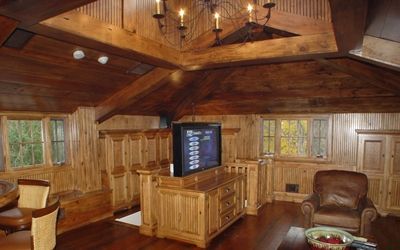
The television is one of the trickiest pieces of technology to integrate into home design. Unlike the home office where the computer is king and the desk cabinetry and bookcases are usually built surrounding the screen, a television is usually a small physical presence in a den or living room, but it is also an overwhelming aspect of the room. Couches, chairs, and tables are arrayed in a way that makes viewing as easy and as comfortable as possible, and forces the room design to focus around television viewing. This should not always have to be the case.
One of the ways we have helped this situation is with an automatic lifting system built directly into a cabinet. With the touch of a remote control, this LCD flat-screen television would rise from the depths of a stand-alone pine cabinet, with only the outline of the hinged opening as evidence. This was done in the living space above a garage, pictured here, in order to protect the screen and hide the television when it was called for.
Sometimes televisions are hidden 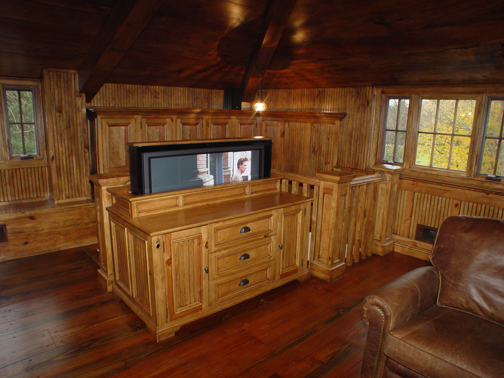 by retractable wall paneling but, in this instance, the angular roof of the garage made no sense aesthetically without taking away some of the desired open space. Because of the flat screen, we could also make the cabinet functional in other ways, such as storage. Not only do cabinet-contained televisions help the look of a home, but they protect the television itself from damage. This set-up also used an electronic hub located in a closet, so that CD/DVD players, receivers, and other components would not be visible in the general area and would have enough air-flow to keep such components from over-heating.
In the event something like this would not work in a home, there are always alternatives that custom services like ZCI Woodworks can bring to your attention to help you make the best choice.